When people in my life have asked me what being a Druid means, Halloween has provided some useful common vocabulary. Among the other things this season means in my Druidry, I explain it is a time for honouring the ancestors. Several people have recognised something in that and asked, “Like the Mexican Day of the Dead?”
It is a good question. The comparison offers a way into something that might otherwise sound unfamiliar, and it has left me wanting to understand more. Why do so many traditions remember the dead around this time of year? What are people doing when they remember, pray for, or welcome those who have died?
When I speak of ancestors, I think of my own family and the generations from whom I’m descended. I also think of the communities whose lives have helped shape mine. Earlier inhabitants of our towns and cities have left us places to live and ways of living together. We inherit culture through a nation’s history, through religious and spiritual communities, and through people whose names we may never learn. Some of that inheritance is so familiar that we barely notice it until we begin asking where it came from.
Samhainn and the ancestors
At Samhainn, I give time to a continuing spiritual relationship with the ancestors. Within the Order of Bards, Ovates and Druids, or OBOD, remembering and honouring departed friends and relatives belongs to the festival. In our ceremonies, we may talk about those who have died, or remember them silently.
That continuing connection makes the idea of the dead returning home particularly interesting to me. In Irish customs associated with Oíche Shamhna, the eve of Samhain, the souls of the dead were expected to visit the family home. Feasting and games accompanied the occasion, along with attempts to discover whom you might marry. Harmful spirits were thought to be abroad too, so people avoided travelling alone, while crosses placed above doorways were intended to protect the home from bad luck in the coming year. Pleasure and apprehension could share the evening quite comfortably; finding a future spouse was evidently another pressing concern.
Welsh traditions give that apprehension some memorable company. On Nos Galan Gaeaf, the eve of the first day of winter, ghosts were said to appear at midnight on stiles. People gathered around bonfires, then hurried home as the flames died down for fear of the Hwch Ddu Gwta, the tailless black sow. Games of divination about marriage and death brought questions about their own futures into this night of roaming spirits.
There were flesh-and-blood visitors to feed as well. In Scotland, guising brought disguised callers from house to house. In South Uist in the 1930s, children dressed in sheepskins, with haystack wigs and rope scarves, offered a song or a joke in exchange for a scone or bannock. The evening also included games with apples and attempts to tell future loves by burning nuts in the fire. Looking at these customs together, I’m struck by how much ordinary sociability went on alongside the attention to spirits. The prospect of otherworldly visitors could coexist with a good evening among the neighbours.
An exchange at the door could have an explicitly religious purpose too. In England, soul cakes were small round cakes baked to be given away around All Saints’ Day and All Souls’ Day. Poorer people went from house to house asking for them, a custom known as souling, and offered prayers for the dead in return. The custom took different forms over time and place; in seventeenth-century Shropshire, visitors could take a cake from a heap set out on All Souls’ Day. Food passed between the living with the intention of helping those who had died.
That exchange brings the Christian calendar directly into the question. Why were prayers for the dead particularly associated with these days, and how do they sit alongside the ancestral remembrance I know through Druidry?
All Saints and All Souls
The Christian connection is already there in the name Halloween. The ‘hallows’ are the saints, and All Hallows’ Eve, on 31 October, is the evening before their feast on 1 November. It was a vigil, a time of prayer and preparation for the holy day ahead. In medieval England, services for All Saints began on the eve and continued through the following day. The evening had a place within the religious observance, alongside the visiting and merrymaking we have already encountered.
All Saints’ Day honours the saints, whose lives offer examples of Christian faith. In the Church of England, their example can encourage and shape the lives of Christians today. That wider community of faith interests me as a Druid. Religious communities inherit the lives and work of people far beyond anyone’s immediate family. Someone we never knew can help shape our spiritual life, which is something I recognise through my own understanding of ancestry.
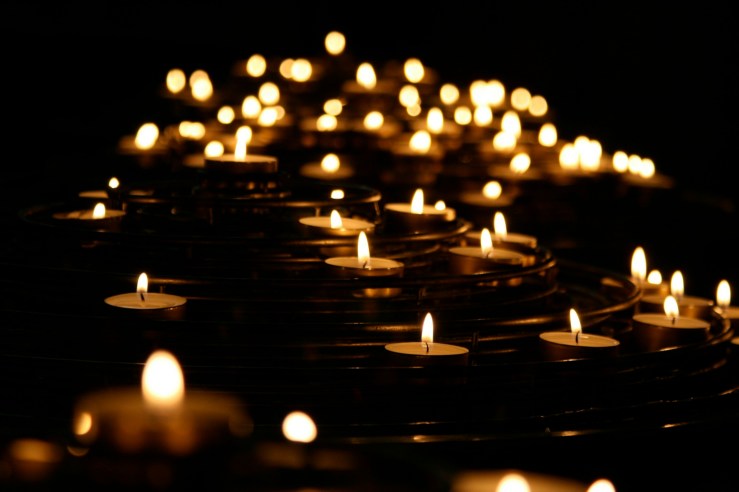
All Souls’ Day follows on 2 November, commemorating the faithful departed, and remembrance often comes closer to home. In the Church of England, services can include names read aloud and candles lit for those who have died. I recognise something of our Druid ceremonies in that attention to particular people. We too may speak about someone who has died, or remember them silently during the ceremony. The Christian service expresses faith in resurrection, and the act of gathering to remember offers a connection with my own practice.
For Catholics, care for the departed also includes helping souls in Purgatory, the final purification of people who have died in God’s grace before entering heaven. Prayers, Masses and acts of charity can be offered on their behalf.
Those prayers have a Christian history reaching back long before the November observance. Christians remembered particular people on anniversaries of their deaths, and medieval monasteries associated with Cluny helped spread a shared annual commemoration on 2 November. Remembering could follow the dates of individual lives and also bring people together at a common point in the year.
These neighbouring dates make me wonder how much history the observances share. Some writers have suggested that the Church placed its festivals here to replace an older Celtic feast of the dead. That explanation is disputed, and it raises a question about the Samhainn I practise: how far back can its emphasis on the ancestors actually be traced?
Ronald Hutton’s research follows the familiar historical picture back through the influential interpretations of John Rhys and James Frazer. Medieval Irish stories give Samhain an important place as a time of gatherings and supernatural activity. Hutton finds very little in them to establish an annual festival for remembering the dead. The returning ancestors familiar from later folklore and modern Druid practice cannot simply be carried back into those earlier stories as an established ancient custom.
He also finds no firm evidence that the Christian feasts were created to replace such a festival. We can trace the Christian practice of praying for the dead, while the evidence for an ancient Celtic festival devoted to ancestral remembrance is much less clear.
For me, holding two truths together means acknowledging that uncertainty while being clear about the spiritual relationship I continue to have with the ancestors. The meaning I find in Samhainn grows through that relationship, and through giving it attention in ceremony. OBOD’s teachings help me honour my own family and the wider ancestors whose lives have helped shape mine, while Hutton’s work helps me understand how some of the stories told about the season developed. I can recognise how the festival has changed and been reinterpreted over time, and continue to find spiritual meaning in the ceremonies through which I honour the ancestors.
Día de Muertos and the welcome home
The Christian calendar also brings us back to the comparison people have made when I talk about Samhainn: “Like the Mexican Day of the Dead?” Catholic feasts introduced through Spanish colonisation in the sixteenth century met Indigenous beliefs and practices concerning the dead. Día de Muertos brings these traditions together, with customs that vary between regions and communities.
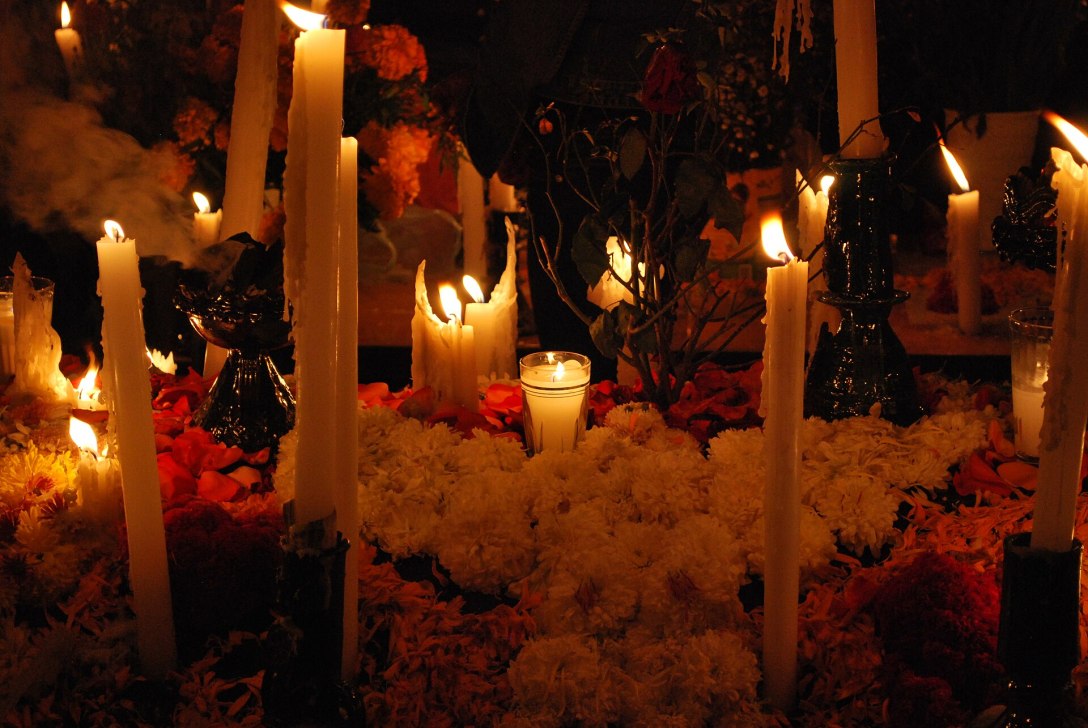
In many Indigenous Mexican observances, the dead are welcomed back for a temporary visit to their families. Flower petals and candles guide them between cemetery and home, where favourite dishes are prepared for their arrival. An ofrenda, an offering for the dead, can include water to quench their thirst after the journey, alongside food and drink they enjoyed in life. Preparing a favourite meal is a wonderfully personal form of hospitality. Families remember what their loved ones liked, and can still express their affection by making it for them.
That welcome takes months of preparation in Xantolo, the Festival of the Souls, among Nahua communities in the Huasteca region of Hidalgo. Marigolds are planted in late June for the altars that families begin assembling on 30 October. Embroidered cloths and arches of sugar cane help prepare the space, while prayers, copal incense and fireworks call to the souls. Dances and processions announce that they are welcome.
Children’s souls are welcomed on 31 October, followed by those of adults on 1 November. Offerings include chocolate, tamales, parcels of filled maize dough cooked in leaf wrappers, and pan de muerto, or “bread of the dead”, made in many regional forms. After exchanging offerings with their neighbours on 1st November, families gather in the cemetery on 2 November to decorate the graves and attend Mass, bringing the welcome at home together with Catholic prayers for the departed’s eternal rest.
The comparison with soul cakes brings us back to food as a way for neighbours to care for the dead. Here, the ofrenda gives that care the intimacy of a meal prepared for a returning guest.
I recognise something of my own Druidry in the wish to sustain a relationship with the dead and give it attention through ceremony. Here, that attention also runs through the work of preparing a household for a visit. As younger people learn the music and dances of Xantolo, they also learn something of how their community understands the world. The people who teach those customs help shape the spiritual life of their community, just as earlier generations within my own tradition have helped shape mine.
Kites, spirits and fourteen lamps
In Santiago Sacatepéquez and Sumpango, Guatemala, people learn to honour their ancestors through the shared work of making giant barriletes, or kites. These predominantly Maya-Kaqchikel communities prepare them for All Saints’ Day on 1 November, with work beginning in July as groups choose a design and create a surface of coloured tissue paper and a supporting framework of cane or bamboo. Some reach more than twenty metres across, and the finished kites are flown or displayed according to their size.
Preparing the bamboo has its own ceremonial place, with blessings for the materials used to cut and transport it, followed by a procession and a Maya ceremony when it is brought back. The designs can address the environment, violence and human rights, so this inherited craft also gives the living a way to speak about their present concerns. Younger people learn through taking part, joining a community’s conversation with its ancestors as they acquire the skills to continue it.
Shared celebration can be boisterous in Haitian Vodou, where Fèt Gede brings people into streets and cemeteries, particularly on 1 and 2 November, within a wider month of ceremonies. Singing and dancing accompany the devotions, while visitors may offer coffee and grilled corn at the graves of relatives and friends and take time to speak with them. The relationship with the dead has a place within the bustle of a public gathering, as well as in those more personal conversations.
The festival honours the ancestors alongside the Gede, a family of lwa, or spirits, associated with death, sexuality and regeneration. Their humour can be bawdy, with erotic jokes and playful sexual gestures forming part of their encounters with devotees. Vodou priestess Marie Maude Evans explains that the Gede help people become familiar with death. Through her explanation, the laughter becomes part of the spiritual work of the festival, a way of approaching something people may otherwise fear.
The wish to maintain a relationship with the dead is familiar to me through my own Druidry, and it comes through clearly in the way the New Orleans Vodou community La Source Ancienne Ounfo describes its Fèt Gede gathering. Alongside ancestor altars and offerings, its ceremony includes a procession to a cemetery to feed the dead and offer prayers. The organisers speak of ancestors guiding the living, and of a community that can continue to honour and spend time with its dead.
Welcoming the ancestors can also involve protecting a household from other spirits. In Bengali Hindu observance, Bhoot Chaturdashi falls on the fourteenth day of the waning fortnight in Kartik, just before Kali Puja, the festival honouring the goddess Kali. One belief associated with the occasion is that fourteen generations of ancestors return to visit their families, who light fourteen oil lamps, choddo prodip, to guide them home and keep harmful spirits away. Fourteen appears again in the meal of leafy greens, choddo shaak, prepared from fourteen different kinds of leaves. The lamps bring us back to the mixture of hospitality and caution we met in Ireland, where the expected return of family members went alongside precautions against harmful spirits.
In Barishal, Bangladesh, Shmashan Deepali brings families to the Kaunia Mahasmashan cremation ground on Bhoot Chaturdashi, before Kali Puja. Candles illuminate the grounds as people remember their relatives and pray for the peace of their souls, and families also prepare foods their loved ones enjoyed. Those favourite dishes bring me straight back to the Mexican ofrendas, where a welcome is shaped by knowing what a particular person would like.
The lights offer another connection with the customs we have already explored. A lamp can guide a returning ancestor home, help protect a household or accompany a Christian prayer for someone who has died. I find those purposes as interesting as the resemblance between the flames: they tell us something about how people understand the dead, and what continuing to care for them involves.
Why this part of the year?
The Christian calendar gives us one part of the answer. All Saints’ Day and All Souls’ Day travelled with Christianity, and in Mexico and Guatemala we have seen how Indigenous traditions came into relationship with those feasts. Fèt Gede occupies the same November days in Haiti, where African ancestral traditions and Catholic observance also meet. The dates have travelled, and communities have brought their own ways of honouring the dead to them.
Season has a part to play too. In Ireland, Samhain marked the opening of winter, and within my Druidry the Wheel of the Year brings us through the harvest celebrations towards Samhainn and the darker months. Following that cycle of seasonal festivals means paying attention as the growth and abundance of summer give way to a period of withdrawal and rest.
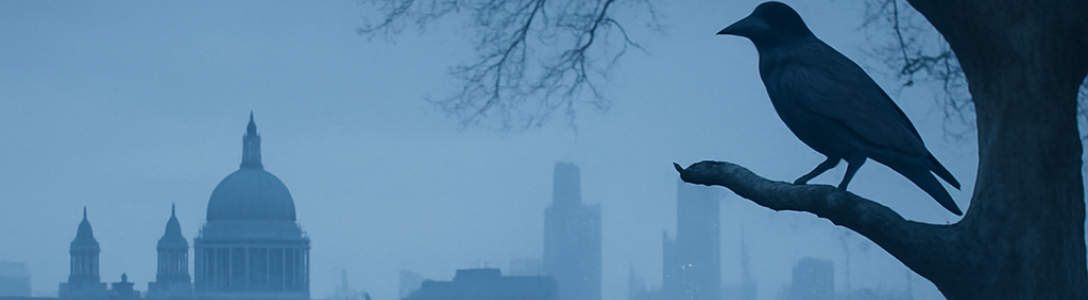
Here in London, the shortening days and the year’s movement towards winter offer their own invitation to contemplate endings. As leaves fall and plants die back, I find it a natural time to remember people whose lives have ended. Within the Wheel, death and rebirth are part of the same cycle, with winter’s rest preceding the new growth of spring.
The shorter days also made the practical need for firelight, candles and lamps more pressing, long before electric lighting. Having a light waiting at home can be an act of care for a living visitor; when it is set out for the dead, that familiar welcome takes on a spiritual purpose.
Elsewhere, different rhythms of the year give remembrance another setting. The Indigenous Mexican festivities coincide with the completion of the maize-growing cycle, bringing the harvest and the welcome for the dead into the same period of community life. Bhoot Chaturdashi, meanwhile, is tied to the lunar cycle, so its date moves in relation to the fixed November dates of the Christian feasts.
The welcoming lights also offer a comparison from another season. In Japan, Obon is a Buddhist observance welcoming ancestral spirits home in July or August, depending on the region. Lanterns or small fires can guide their arrival and departure, while families visit the graves and bring offerings. The welcome is recognisable from the Mexican and Bengali customs, even though these lights belong to a summer night.
What we carry forward
The ancestors I honour at Samhainn include my own family and the generations from whom I’m descended. I also think of the people whose lives helped shape London and my wider community, and of those through whom I have inherited a spiritual tradition. Their work and knowledge remain part of my life, including the contributions of people whose names I will never know.
My connection with the ancestors is a continuing spiritual relationship, and Samhainn gives me time to honour it in ceremony. I recognise something of that care in a family preparing a favourite meal for someone who has died, and in the shared work through which a community teaches its younger members how to honour the dead.
Within the Wheel of the Year, Samhainn follows the autumn harvest and brings us towards winter’s rest. As the land falls quiet, there is time to reflect on what the year has given us and what has come to an end. Allowing myself that pause is part of preparing for renewal, just as the land’s withdrawal belongs to the cycle of death and rebirth that will bring us to spring.
Remembering the ancestors also brings me to the thought that one day we will take our place among them. As earlier generations have helped shape our lives, so our lives will become part of what others inherit, within our families and in the wider communities to which we belong. That thought carries responsibility for what we pass on, as well as the privilege of belonging to something that began before us and will continue after us.
Selected sources and further reading
For anyone who would like to read further, these sources offer more on the customs and the historical questions behind them.
- OBOD’s introductions to Samhain and the seasonal wheel explain the place of ancestral remembrance and renewal in modern Druid practice.
- Museum and heritage articles give more detail on Irish customs, Welsh traditions, guising in South Uist and English soul cakes.
- The Church of England’s seasonal introduction explores belonging among the living and the dead, while Vatican News describes the development of All Souls.
- Ronald Hutton, “The Celtic New Year and Feast of the Dead”, Folklore 135(1), 2024, pp. 69–86. Hutton examines how Samhain came to be described as an ancient Celtic feast of the dead, and how well the historical evidence supports that description.
- UNESCO introduces the Indigenous festivities of Día de Muertos and their meeting with Catholic traditions. INPI’s Xantolo article, in Spanish, follows the preparations and observances in the Huasteca region of Hidalgo.
- UNESCO explains how the tradition of making giant kites in Santiago Sacatepéquez and Sumpango is passed on and understood as a connection with the ancestors.
- The Fèt Gede organisers in New Orleans explain their community’s relationship with the dead. A Duke University collection entry includes Marie Maude Evans’s explanation of how the Gede help people become familiar with death.
- The Indian Express (2023) explains Bhoot Chaturdashi’s lamps and ancestral visitors, while the Daily Star (2024) reports on candlelit remembrance and favourite foods in Barishal.
- The Japan Forum explains Obon’s regional July and August dates and the use of lights and offerings when welcoming ancestral spirits home.
- Featured image: “Flores y velas en ofrenda – Mixquic I” by J Mndz, via Wikimedia Commons, CC BY-SA 2.0. Resized for web.


